Gamlegård (The Old farm) with associated buildings
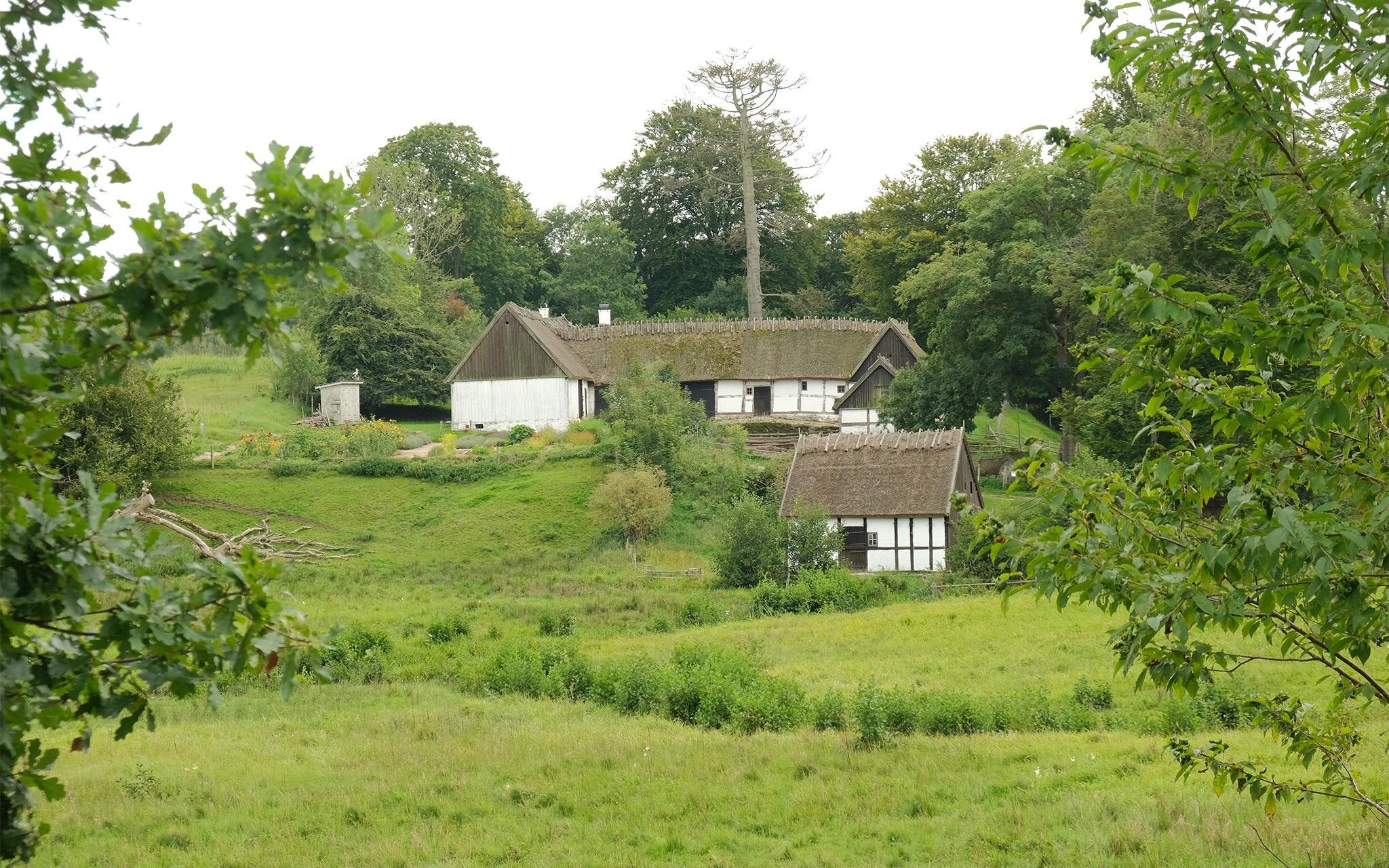
Scania half-timbered farmhouse
Gamlegård is a four-winged half-timbered farm built in the 1810s on the same site where it is now located. The culture has supplemented the farm with the type of economic buildings that were usually found on such a farm during the 1800s.
Farm buildings
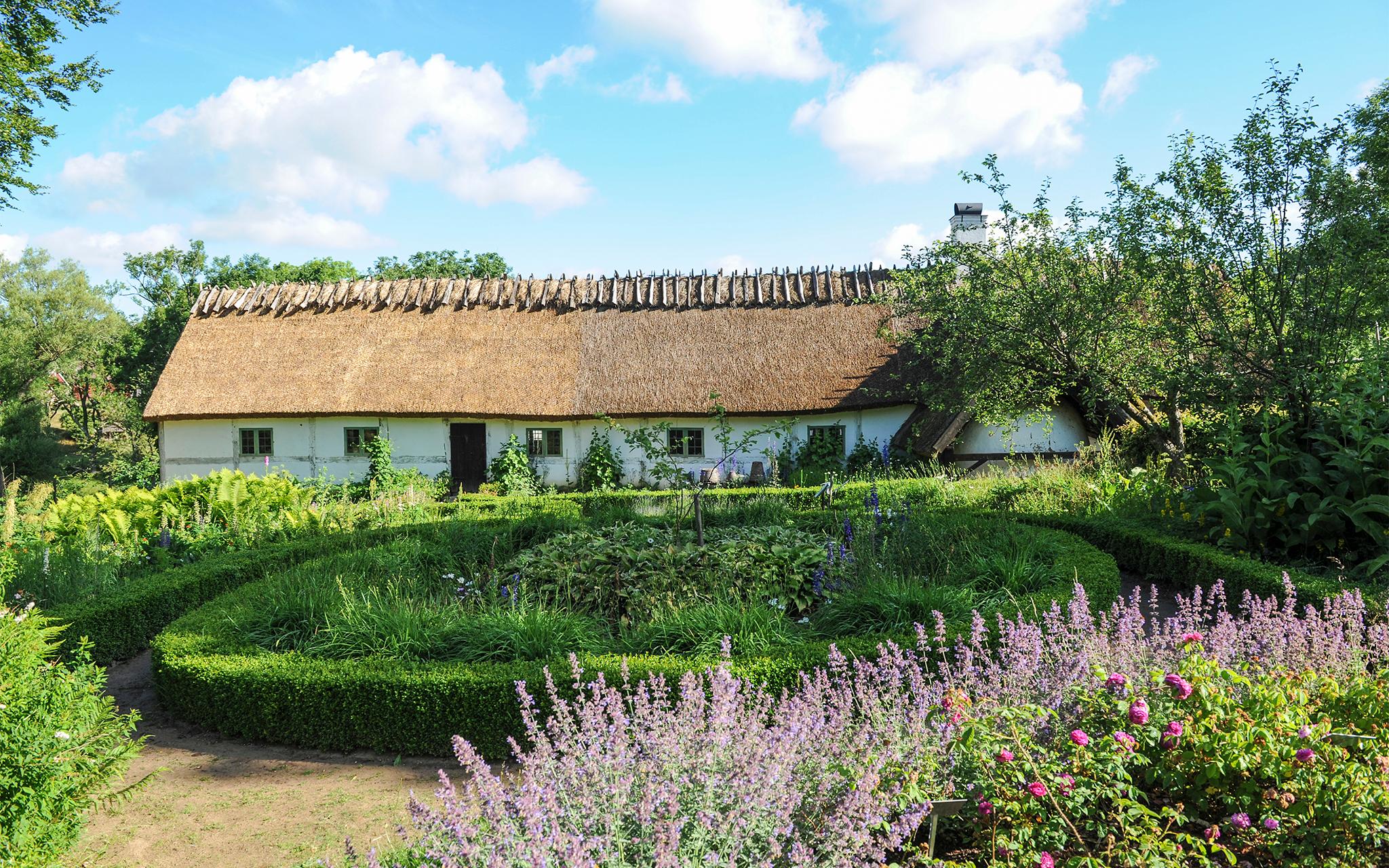
Gamlegård
The four-winged half-timbered farm Gamlegård was built in the 1810s. A fire had ravaged the small village of Östarp and its three farms two years earlier, and Gamlegård was built on the same site as the old farm.
Half-timbered farm
The farm is constructed in half-timbering with clay fillings on a reinforcement of rods with straw braiding. Over the years, many bays have come to have fillings of so-called raw stone. The half-timbered construction belongs to an older time than the year of construction, which can be seen in the way the roof beams are mortised through the upper part of the wall posts.
Typical of Skåne's flatlands
The four-winged farm type is typical of Skåne's flatlands. The enclosed plan provided protection against the winds of the plain and uninvited guests, while at the same time the most important functions were gathered around the farmyard. Nowadays, Gamlegård is as in the old days completely whitewashed, but when Kulturen took over the buildings, the timber was tarred to create a typical Skåne impression.
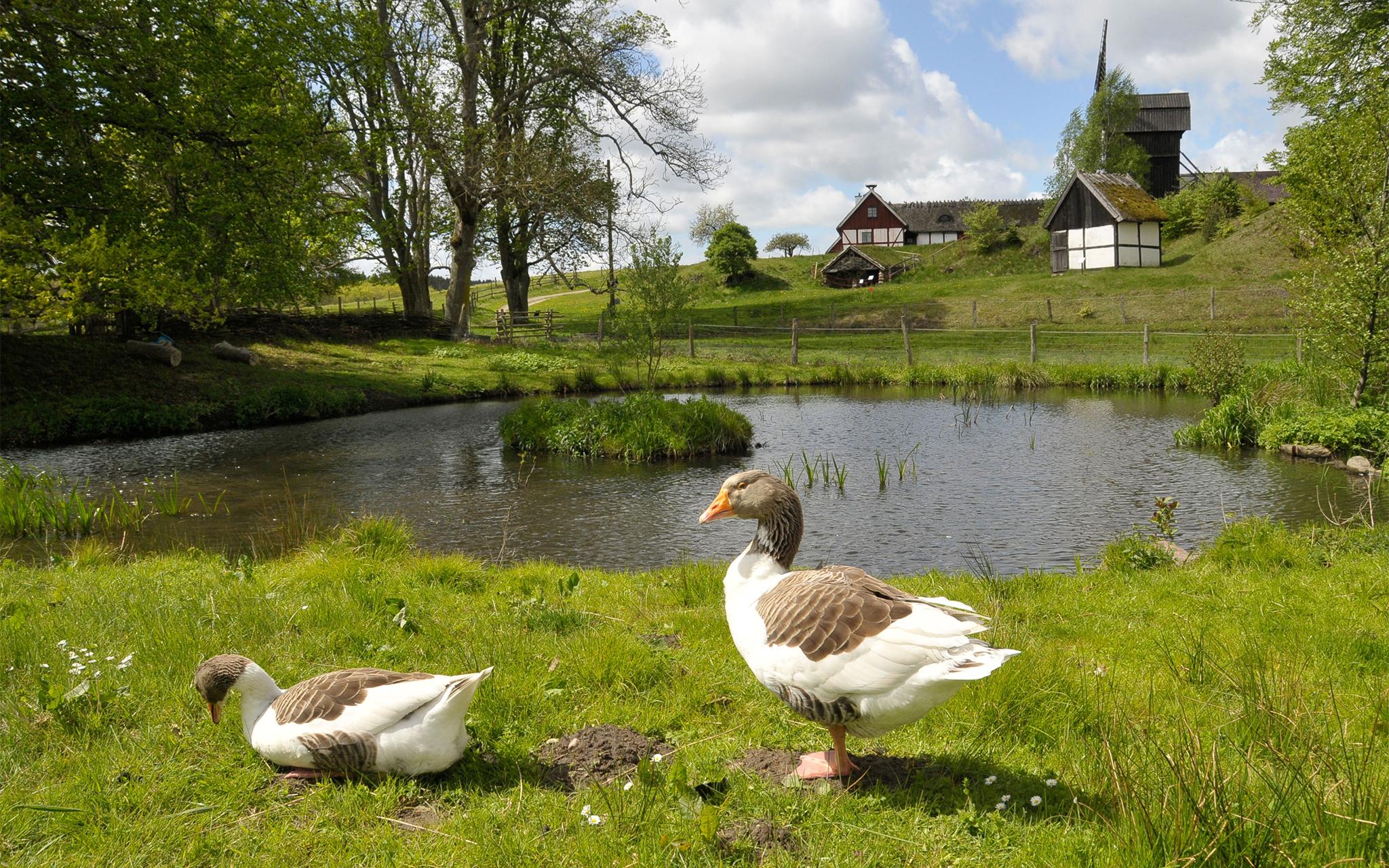
The Malt Kiln
On a larger farm, there used to be a drying house, a malt kiln, for malt. The malt was used for brewing beer.
From the 19th Century
The malt kiln is from the 19th century and is built in half-timbering. It was moved to Östarp from a neighboring village in 1924 by Kulturen, to replace Östarp's own malt kiln which was demolished before Kulturen bought the farm.
Brick Oven
Malt is barley that has been moistened and allowed to begin germinating in warmth. This process was then interrupted in the kiln where the barley was spread out on perforated boards over a brick oven called the boar. The smoke gave the malt different flavors depending on the type of wood used. The finished malt was then used for brewing beer.
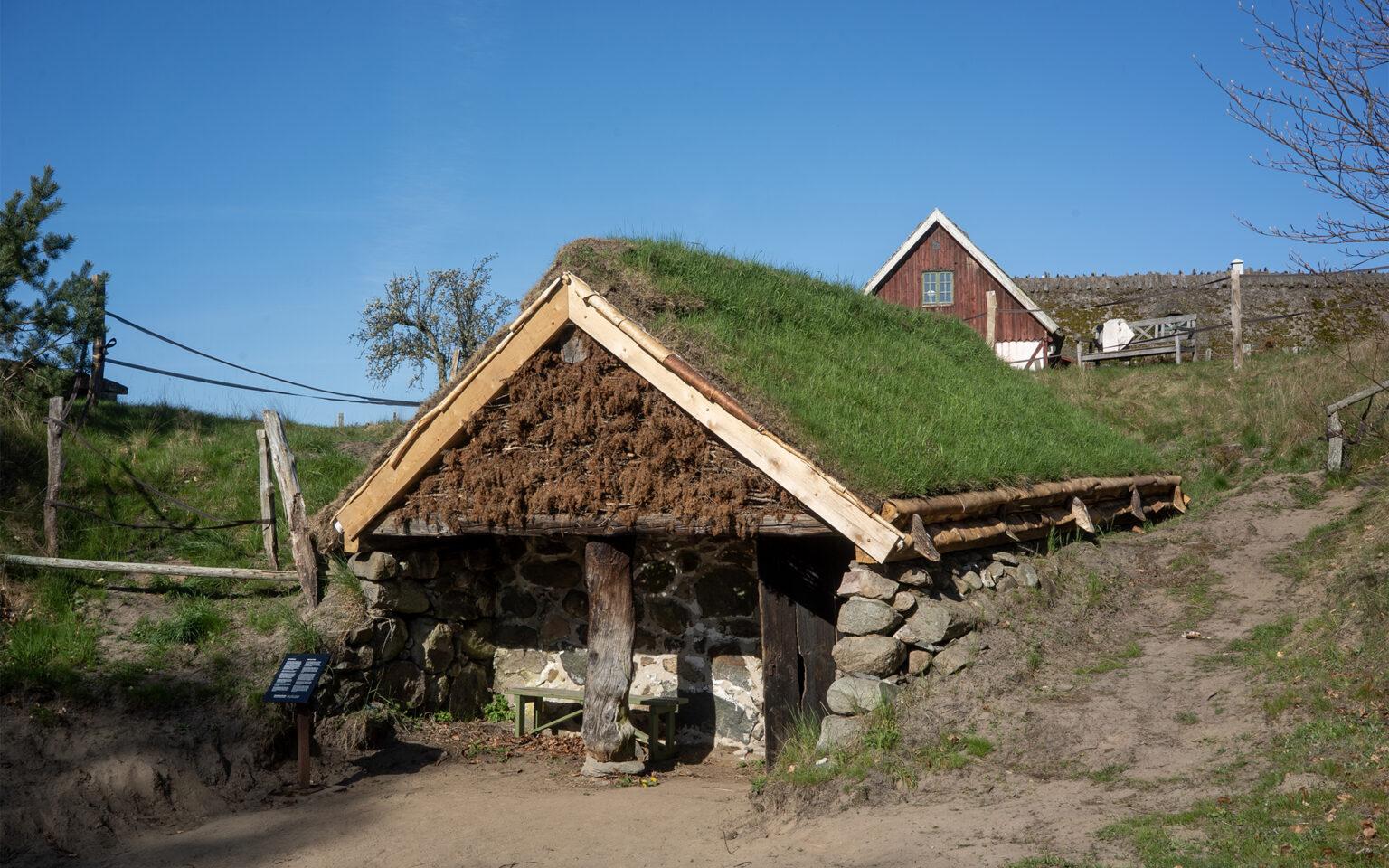
The Cabin
The break cottage was used for flax processing. Since flax is very flammable, it was placed at a proper distance from the rest of the farm.
Drying and Breaking
In the break cottage, the flax was dried after retting. The sheaves were placed on racks in the cottage to dry in the heat from the corner-placed oven. After drying, the flax was broken. When this arduous work was over, it was customary to celebrate it with so-called break feasts.
Reconstruction
Östarp's break cottage was erected in 1924, modeled on a neighboring farm to Östarp.
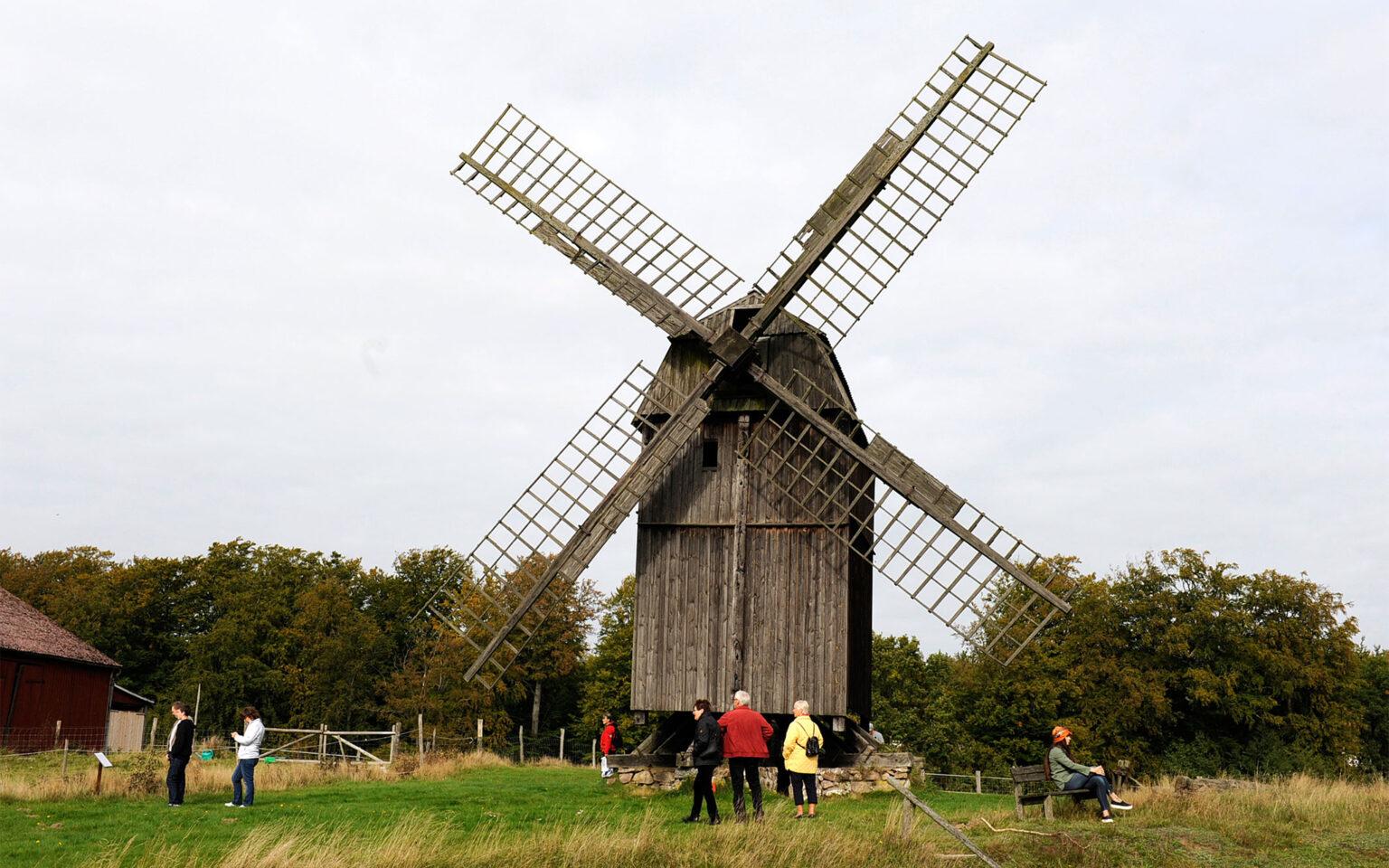
The Windmill
The windmill is known as a post mill, built in the early 1800s. It originally stood in the Vipeholm area in Lund, but was moved in 1845 to Skönadal east of Villa Sunna and from there to Kulturen's Östarp in 1924.
Museum Placement
The placement of the mill is more museal than realistic since the surrounding trees obstruct the wind. Characteristic of post mills is that the entire mill house is rotatable to catch the wind.
Existed into the 1900s
A post mill may very well have stood at Gamlegård during the 1800s. But at that time, the so-called Dutch or cap mills were the most common. On them, only the upper part, the so-called cap, turned with the wind. The new construction was larger and more costly to erect, which is why post mills continued in commercial operation, in some cases well into the 1900s.
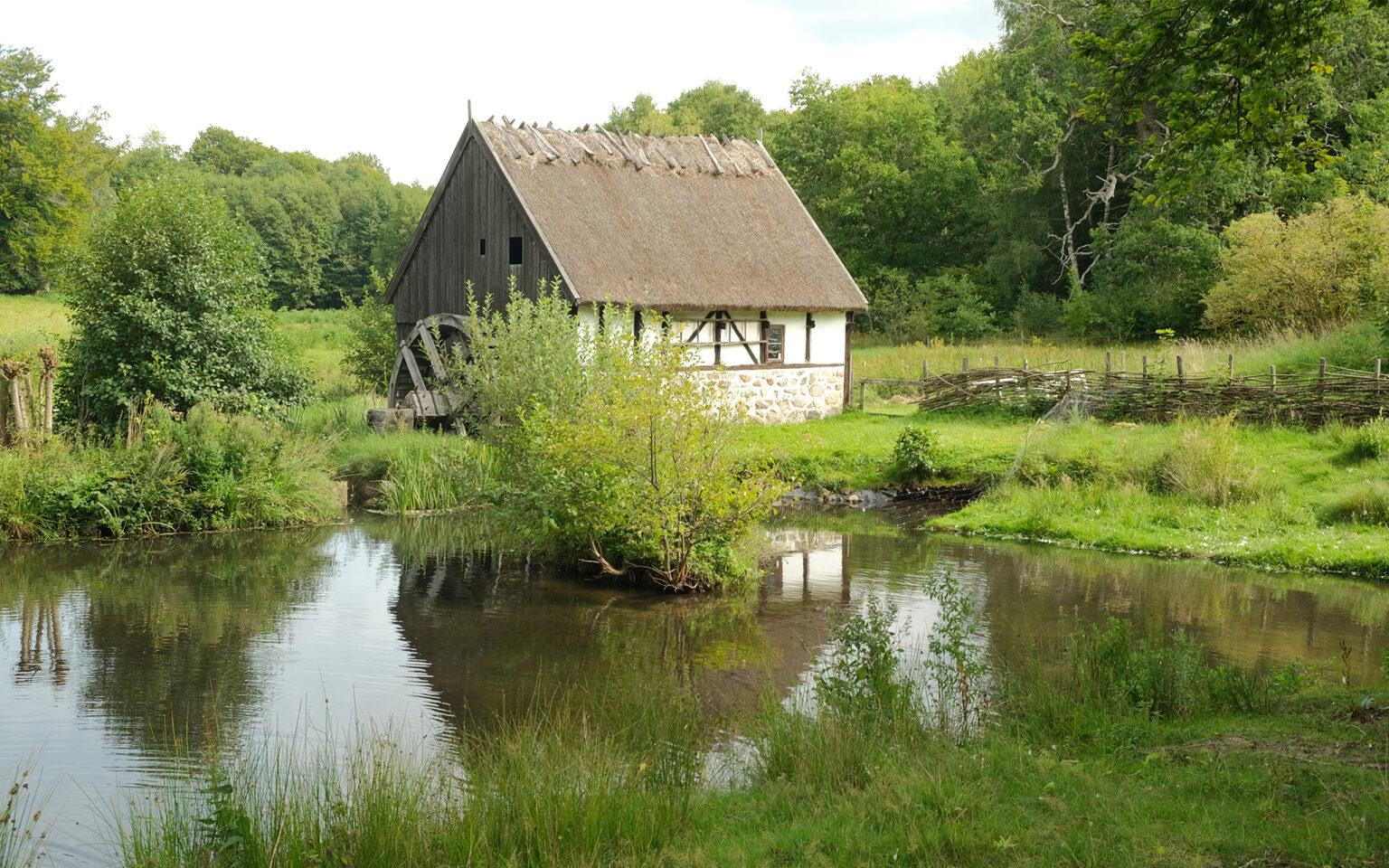
Water Mill
As early as 1705, a water mill was built at Östarp. The mill was demolished in the 1840s in connection with the redistribution of Östarp, and a new one was built a bit further downstream. For the opening of the open-air museum in 1924, the mill was moved back to almost the same location as the old mill had been.
Treadmill for Grinding Rye
It was the landowner Alexander Scharp who introduced this type of treadmill in the village. It is larger than the so-called tub mills and it was mainly used for grinding rye. The treadmill has an undershot wheel that drives the millstone. The simple construction existed as early as Roman times, and was the most common type of mill in Skåne well into the 19th century.